When to Plant Trees and Shrubs in Georgetown, Texas
Fall into early winter is the time to plant trees and shrubs in Georgetown, TX. Why it works, how to dig in caliche and clay, and how city watering rules apply.
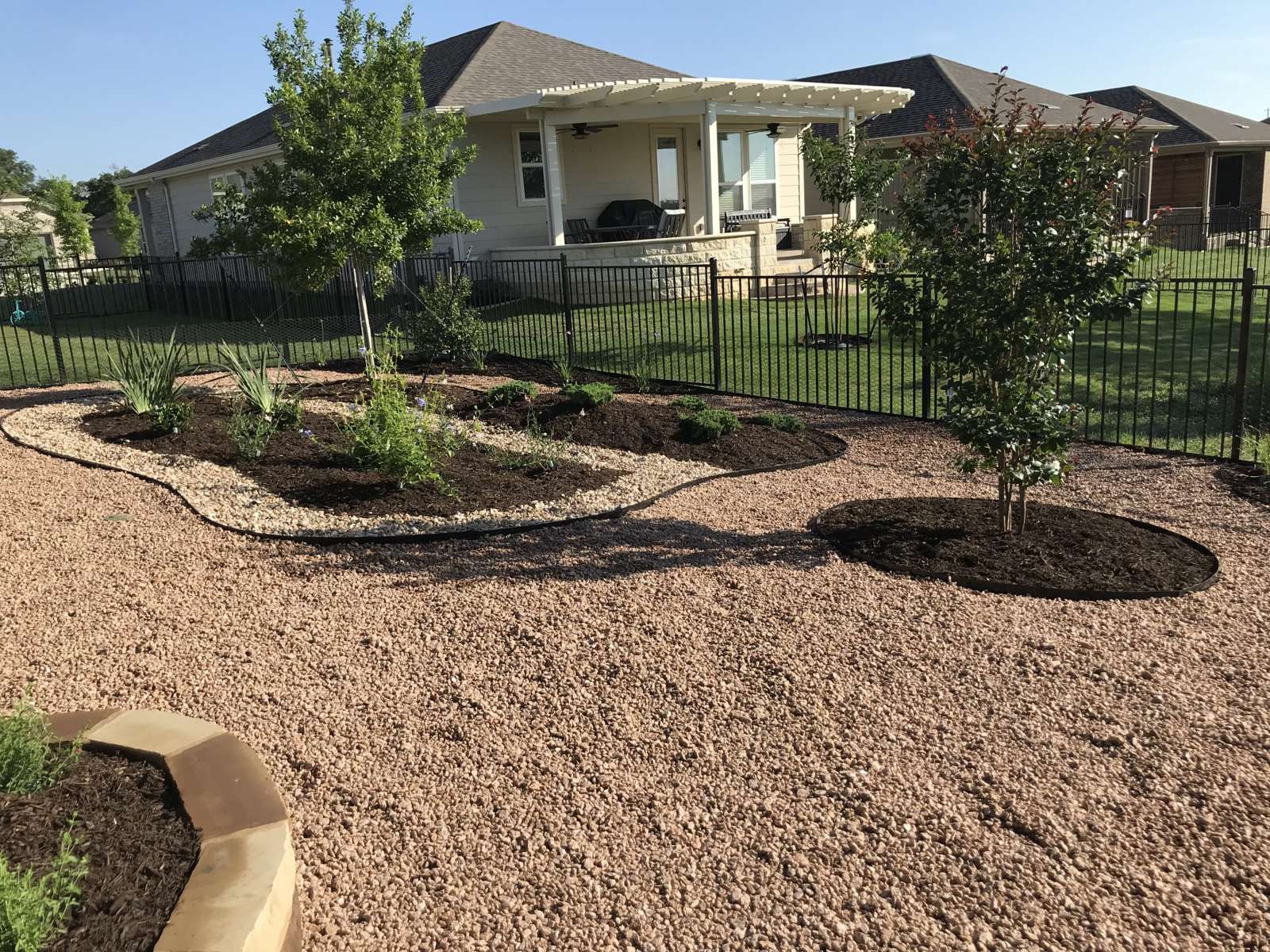
The best time to plant trees and shrubs in Georgetown is from fall into early winter, while the soil is warm enough for roots to grow and summer is months away. Texas A&M AgriLife calls late fall and early winter "the perfect time to plant shade trees" in Texas, so a tree set this November goes into its first August with a larger root system than one set in April.
Timing only helps if the tree is planted and watered correctly. Here is why the window works, how Georgetown's ground changes the job, and how the city's watering rules apply.
Why is fall better than spring for planting in Georgetown?
Fall works because roots keep growing after the top of the plant goes quiet. Texas Master Gardeners in Grayson County write that roots "will grow well anytime the soil temperatures are greater than 40 degrees," which in Texas can cover most of winter. The 2023 USDA Plant Hardiness Zone Map puts ZIP codes 78626 and 78628 in zone 9a, with an average coldest night of 20 to 25 °F, and 78633 in zone 8b, at 15 to 20 °F.
Those extra months pay off in the heat. Eric Taylor of the Texas A&M Forest Service puts it simply: "The larger the root system, the better off that tree will be in the summer." Trees planted in spring or summer can still do well, Taylor adds, but they need more frequent watering.
How late can you plant trees and shrubs here?
Most trees and shrubs can go in through December, and dormant deciduous trees can go in until early spring. Taylor gives late fall to early spring as the best period for deciduous trees, and he prefers fall, as soon as the soil has enough moisture. The Grayson County Master Gardeners extend the fall window through December but make two exceptions: fruit trees and rose bushes.
Container trees can be planted any time of year with proper care, but each week of waiting gives up root growth before summer.
What does Georgetown soil change about planting?
Georgetown soil changes how you dig, because the ground differs on each side of the interstate. The Williamson County Master Gardener tree guide describes thin, stony limestone soil with a layer of caliche to the west and deep, heavy black clay to the east.
- Test the drainage first. The Texas A&M Forest Service says to fill the empty hole with water and pick another site if it takes longer than 24 hours to drain.
- Break up caliche. The Williamson County guide says caliche at the bottom of the hole should be busted up so some roots can get through it.
- Dig wide, not deep. The same guide calls for a hole 2 to 3 times the diameter of the root ball and 1 to 2 inches shallower than the ball is tall, which leaves the trunk flare above grade.
- Backfill with what came out. The Forest Service says to use the same soil from the hole and add no soil amendments.
Depth deserves the most care. The Forest Service calls planting too deep "a leading cause of mortality in newly planted trees."
Which trees suit a Georgetown yard?
Natives from the county's own soil regions are a sound starting point. These four come from the Williamson County Master Gardener guide:
| Tree | Native to | Height |
|---|---|---|
| Chinkapin oak | Blackland and Edwards Plateau | 50 to 70 feet |
| Texas ash | Blackland and Edwards Plateau | 30 to 45 feet |
| Rusty blackhaw | Blackland and Edwards Plateau | 10 to 25 feet |
| American smoketree | Edwards Plateau | 15 to 20 feet |
Our earlier guide to native plants for Georgetown's alkaline clay covers why soil chemistry rules out so many nursery favorites, and our native and adapted plants page shows what we install.
Oaks are one more reason to plant early. TexasOakWilt.org says all wounding of oaks should be avoided from February through June, so an oak planted before February can have any broken branches cleaned up before that period starts.
How much water does a new tree need under Georgetown's rules?
A new tree needs six to eight gallons per inch of trunk diameter each week, according to the Texas A&M Forest Service, delivered as a thorough soaking and continued for at least the first two years. In winter the need drops: the Forest Service says dormant hardwoods can go to once or twice per month, depending on rainfall, and that dry soil should be watered ahead of a forecast hard freeze.
The simplest way to stay within the rules is a hand-held hose. Georgetown Water allows hand-held hose or bucket watering any day and any time, and names trees specifically. Soaker hoses and drip lines are different: they follow the two-day Stage 1 schedule, with no watering from 9 a.m. to 7 p.m. and none on Mondays.
Larger installs may need a variance to water outside that schedule. The utility requires one for new landscaping such as new construction or replaced sod, says replacement projects must cover at least 200 square feet, and limits a variance to 14 days. Allow three to five business days for processing, apply before you start, and do not count on one during a declared drought stage, because the city says variances are not guaranteed then.
What should you skip during the first winter?
Skip fertilizer and heavy pruning during the first winter, because a new tree needs its energy for roots. The Forest Service says not to fertilize during the first growing season, and the Williamson County guide limits pruning to dead, broken, rubbing or overlapping branches.
- Mulch, but keep it off the trunk. The Forest Service says two to three inches deep and the county guide says 3 to 4 inches. Both keep it off the bark.
- Stake only if the tree needs it. The county guide says properly planted container trees usually do not.
- Wrap thin bark. The Forest Service recommends a light-colored trunk wrap to prevent sunscald on young, thin-barked trees, removed in spring after the last frost.
Want help getting trees in the ground this season?
B&B Landscaping & Masonry installs trees, shrubs and garden beds as part of our landscaping work in Williamson County, with planting plans built for alkaline clay and full sun. Call 512.635.7701 to talk through what you want planted this winter.