Native and Adapted Plants for Georgetown's Alkaline Clay
Native and adapted plants for a Georgetown, TX yard: why alkaline clay yellows the wrong plants, which natives thrive, oak wilt rules and when to plant.
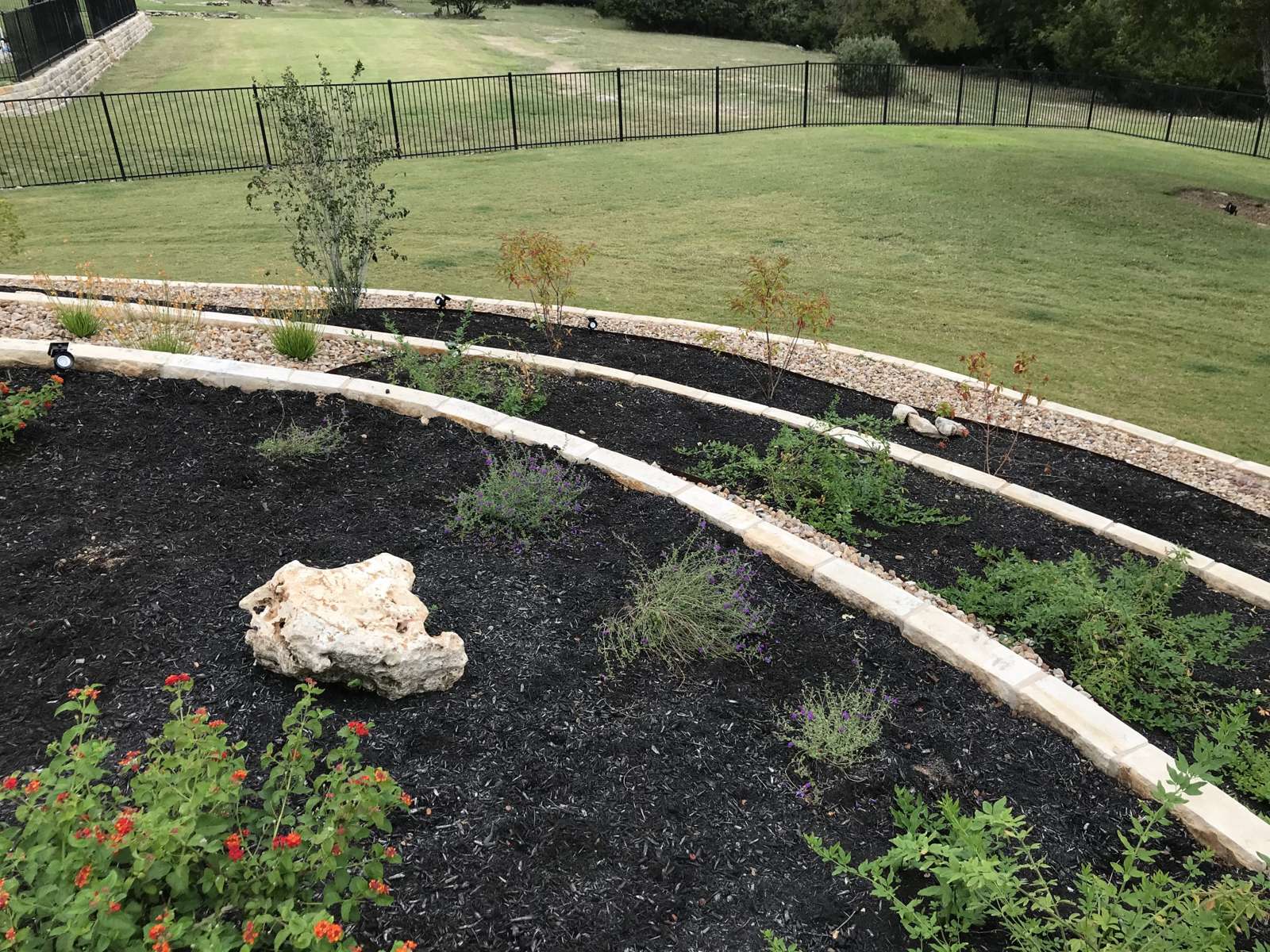
The plants that last in a Georgetown yard are the ones chosen for alkaline soil and thin, rocky ground, and most of them are Texas natives. Texas A&M AgriLife Extension puts Williamson County soil pH at an average of 7.5 to 8.2, which is high enough to starve acid-loving plants of iron no matter how carefully they are watered.
Natives such as cenizo, Lindheimer's muhly, sideoats grama and escarpment live oak are built for that soil. Here is what the soil is, why the wrong plants fail, and which plants suit it.
What is the soil like in Georgetown?
Georgetown sits where two Texas regions meet, so the soil depends on which side of the interstate you live on. The Williamson County Master Gardener tree guide, published by AgriLife, says the county "has 3 different types of soil." West of the interstate is the Edwards Plateau, where "the soil tends to be thin, stony and was formed in limestone or limestone marl," with "a layer of caliche often with limestone bedrock below that." East of it is the Blackland Prairie, with "deep and fertile, black heavy clay soils."
USDA soil descriptions show how different those two grounds are. The Eckrant series, a limestone soil, is "very shallow to shallow over indurated limestone bedrock," with bedrock at 4 to 20 inches. The Houston Black series, a blackland clay, is more than 80 inches deep and has "high shrink-swell potential," cracking open in dry spells. One yard can need deep planting holes and drainage; the next needs pockets of soil cut into rock.
Why do some plants turn yellow here?
Yellowing between green veins on alkaline soil is usually iron chlorosis. A Texas A&M AgriLife Extension horticulture article from Bexar County explains that "the high pH of the soil ties up the iron in the soil, making it unavailable to the plants," and describes the symptom as "green veins and yellow leaf tissue."
The same article names repeat offenders: red tip photinia "often shows symptoms of iron deficiency," and Indian hawthorn, pine trees and even St. Augustine grass "may have problems with alkaline soils and iron chlorosis." Fertilizer and extra water do not fix a plant that cannot use the iron already in the ground. Replacing it with a plant adapted to high pH does.
What hardiness zone is Georgetown in?
Most of Georgetown is zone 9a on the current USDA map. The 2023 USDA Plant Hardiness Zone Map puts ZIP codes 78626 and 78628 in zone 9a, an average annual extreme low of 20 to 25 °F, and ZIP 78633 in zone 8b, 15 to 20 °F. Older plant tags and guides written before 2023 often say 8b for the whole county, so a plant rated only to 9a is a closer call on the north side.
Which native plants handle alkaline clay and limestone?
AgriLife's Earth-Kind landscaping guide says "often the native plants are more resistant (tolerant) to drought, insects and disease," and points to thin-soil Hill Country sites that support Texas persimmon, live oak, agarita and sumac. These four from the Lady Bird Johnson Wildflower Center's native plant database suit Georgetown well:
| Plant | Type | What the Wildflower Center says |
|---|---|---|
| Escarpment live oak | Shade tree | Water use low; grows in soils "usually calcareous, including caliche." Susceptible to oak wilt. |
| Cenizo | Shrub | Takes limestone, clay and caliche; "should not be fertilized or over-watered"; deer resistance high. Needs drainage, or it is prone to cotton root rot. |
| Lindheimer's muhly | Ornamental grass | Prefers alkaline soil (pH>7.2), "well-drained, rocky, limestone soils"; deer resistance high. |
| Sideoats grama | Native grass | The state grass of Texas; drought tolerance high; deer resistance high. |
For a wider list, the Earth-Kind guide recommends AgriLife's Earth-Kind Plant Selector and calls plants with an Earth-Kind Index of 8 or above "extremely resources efficient." Our native and adapted planting plans start from the soil test and the exposure, then pick from lists like these.
Should you plant oaks, given oak wilt?
Oaks are worth planting in Georgetown, with care. The Texas A&M Forest Service says "all oaks are susceptible to oak wilt," that red oaks "can die in as little as one month after being infected," and that live oaks show intermediate susceptibility. Oak wilt "spreads an average of 75 feet per year by the root system," mainly through live oaks.
The Forest Service's TexasOakWilt.org says roughly 20% or less of infected live oaks survive. The prevention rule is simple: avoid pruning or wounding oaks from February through June, paint every cut immediately, and prune when trees are dormant, from November through January. A new oak also benefits from a mix of other species around it, so one disease cannot take every shade tree on the lot.
When is the best time to plant in Georgetown?
Fall. TexasOakWilt.org says "in Texas, fall is the most appropriate time to plant trees," giving roots time to establish before summer, and the Wildflower Center says the best time for most shrubs and trees "is during the dormant period of fall and winter." A bed planted in October or November has its first summer behind a full season of root growth.
What about deer?
Expect browsing near greenbelts and plan for it. AgriLife's Deer in the Urban Landscape, written from Hill Country experience, warns that "few plants are fully deer proof" and recommends caging young trees until they grow beyond the deer's reach. It lists autumn sage and agarita among the shrubs rarely if ever eaten.
Planting for the soil you have
Choosing plants for pH and drainage is most of the work, and it is the part a plant tag never tells you. B&B Landscaping & Masonry designs and installs native and adapted landscapes across Georgetown and Williamson County, often alongside xeriscape beds that cut the watering further. Call 512.635.7701 for a free on-site estimate.