Is Xeriscaping Worth It in Georgetown and Central Texas?
Is xeriscaping worth it in Georgetown and Central Texas? What Austin Water and Georgetown say it saves, the rebate, and when a smaller lawn is the better call.
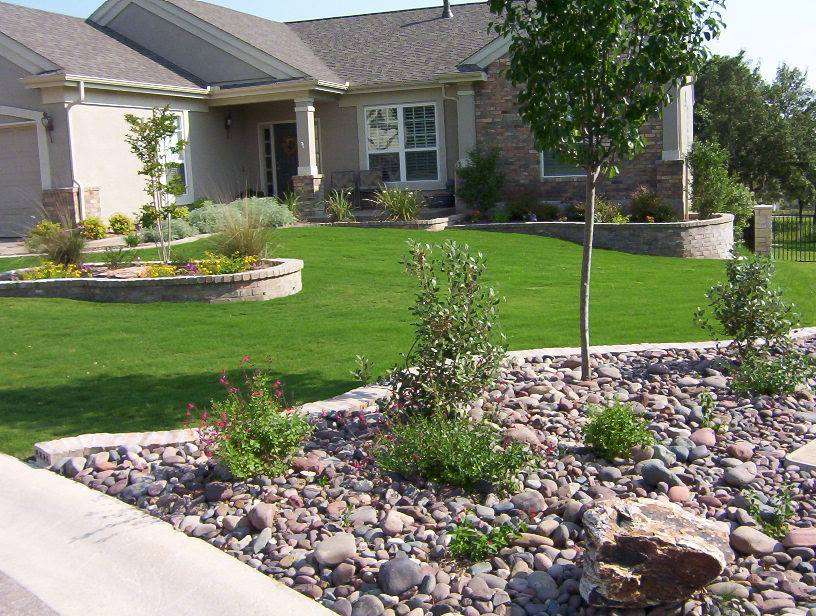
Yes, for most Georgetown and Central Texas yards xeriscaping is worth it, as long as it means replacing thirsty lawn with planted, mulched beds and not burying the yard in gravel. Austin Water estimates that converting a 500-square-foot patch of lawn to native beds could save up to 930 gallons of water a month, and the City of Georgetown rebates part of the cost of a conversion.
Whether xeriscaping pays off in your yard depends on three things: how much lawn you irrigate now, what your water utility allows, and whether the new beds are planted or only covered in rock.
How much water does xeriscaping save in Central Texas?
A planted xeriscape needs a fraction of the water a summer lawn needs. Austin Water's WaterWise Landscaping Rebate Guide states: "Turf typically needs 1 inch of water weekly in summer, while mature native beds may need only ½ to ¾ inch every other week."
The same Austin Water guide puts that difference into gallons. A 500-square-foot turf area "requires about 1,240 gallons monthly," and converting that area "could save up to 930 gallons per month."
Georgetown makes a similar claim for its own customers. The City of Georgetown's water conservation rebates page states: "Native plants use 80% less water than non-native plants and turfgrass."
Both figures describe established plants. Austin Water's wording is "mature native beds," and a new bed needs regular water while its roots grow in, so the savings build over the first seasons and are not there on day one.
Does a xeriscape make sense under Georgetown's watering rules?
A xeriscape fits Georgetown's watering rules better than a lawn does. The Georgetown Water Utility states that its customers "are in two-day (Stage 1) watering restrictions," that watering with an irrigation system "is not permitted on Mondays at any time," and that there is no watering between 9 a.m. and 7 p.m. on any day.
A lawn has to live on those two sprinkler days. Planted beds have more room. Georgetown's rules say watering "with a hand-held hose or bucket can be done any day and at any time, including watering for trees, food gardens, and other plants," and that drip irrigation is allowed on your watering day inside the 14-hour window.
That matters most in a dry summer. A yard that is mostly drip-irrigated beds can be kept alive by hand if the city tightens its restrictions. A yard that is mostly lawn cannot.
What does Georgetown pay toward a xeriscape conversion?
Georgetown offers a rebate for replacing irrigated lawn with native plants. The city's conservation page says its Texas Grown Native Landscaping residential rebate "helps offset the cost of converting irrigated turf grass to a yard with Texas Native Plants" and "will cover the labor and supplies of the conversion up to $3,000 annually."
The Texas Grown rebate requires pre-approval from the city's conservation staff, so contact them before any lawn comes out. The city decides what qualifies, and the terms can change from one budget year to the next.
Georgetown also lists an Irrigation Check-up Rebate of up to $75 for having a licensed irrigator inspect and set an underground system's controller. A conversion is a good time for that check, because beds on drip and lawn on spray heads should not run on the same schedule.
When is xeriscaping not worth it?
Xeriscaping is not worth it when it turns into a yard of bare rock. Rock with no plants reflects heat onto the house, grows weeds through the gravel, and can run against neighborhood rules.
Sun City is the local example. The Sun City Texas Community Association's design guidelines define a xeriscape as a design that "will require 50% or less of the normal amount of irrigation as a turf-based design," and they require planted and inert areas of differing color and texture, "with no extensive areas of a 'desert' or 'barren' appearance." Our guide to xeriscape or new sod in Sun City covers those rules in detail.
Three other cases call for a smaller change:
- You use the lawn. Children and dogs need grass. Keep the lawn they use and convert the strips, slopes and corners nobody walks on.
- You expect no maintenance. A xeriscape still needs weeding, pruning and fresh mulch. It needs less work than a lawn. It does not need none.
- You barely water now. A small, shaded lawn that gets by on rain has little water to save, so the conversion pays back slowly.
What does a xeriscape that pays off look like?
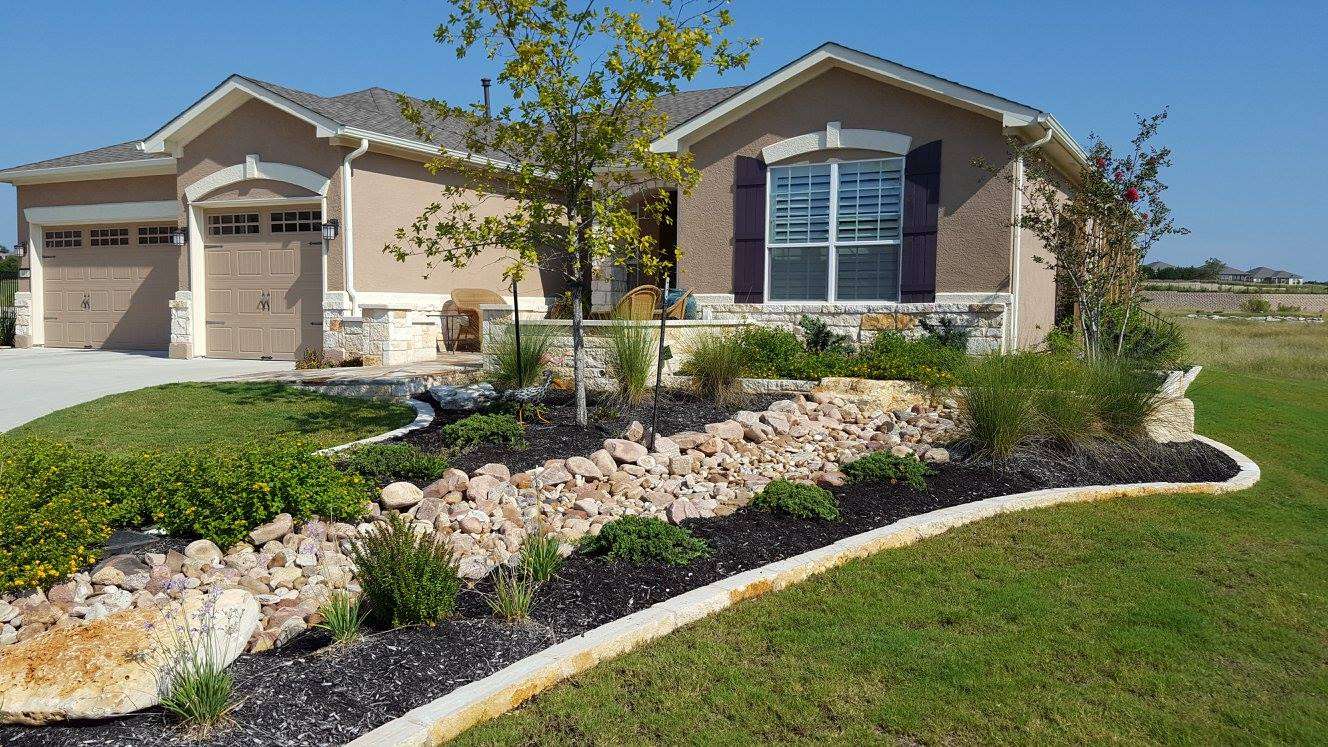
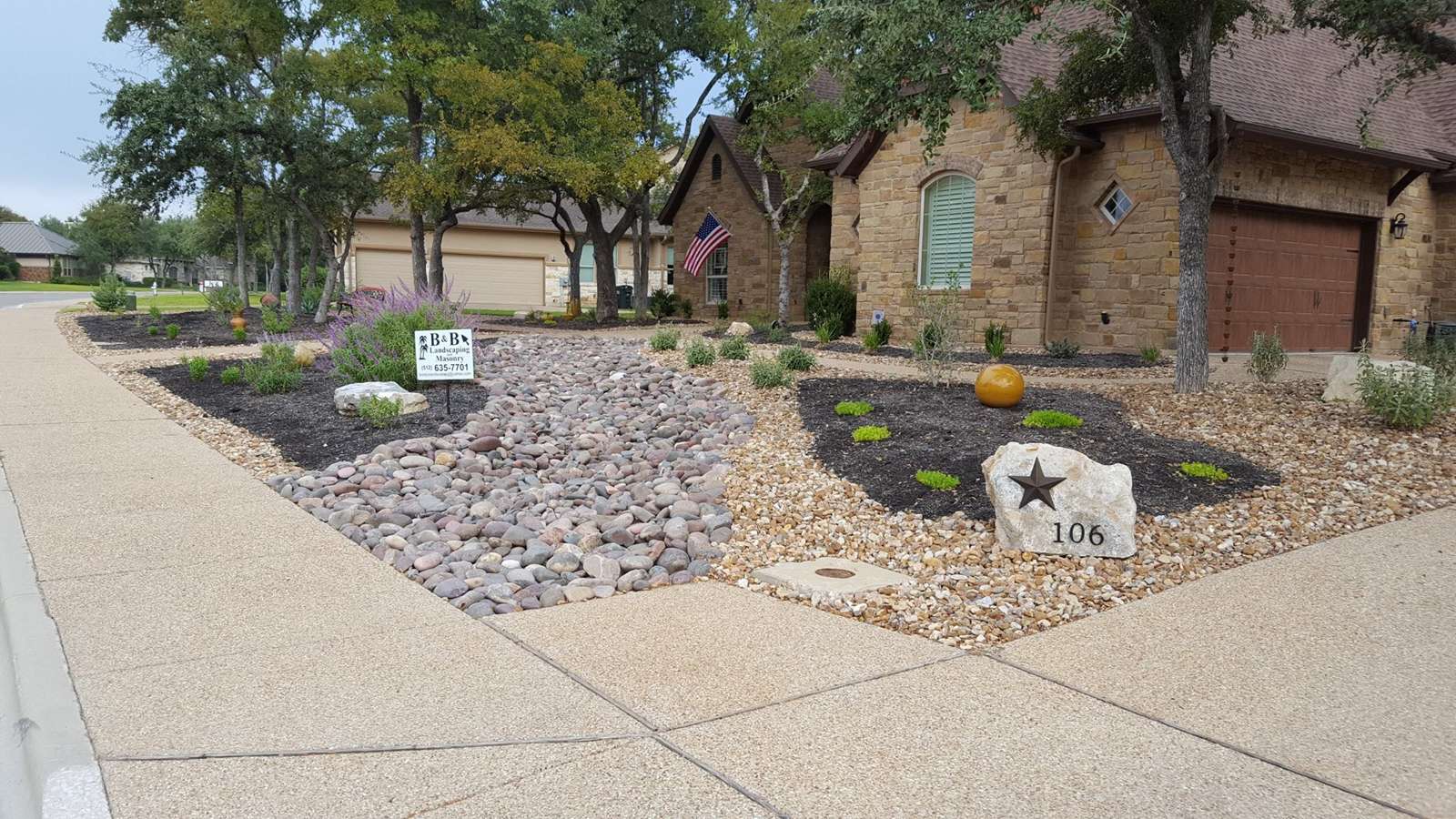
A xeriscape that pays off is mostly plants. It uses native and adapted plants that tolerate thin, alkaline Central Texas soil, mulch or gravel between them, drip irrigation on its own valve, and a lawn only where the household uses one.
Stone does the structural work. Boulders, dry creek beds and limestone edging move stormwater and hold slopes where grass struggles, which is why a mixed design of stone, plants and a reduced lawn is the version we build most often in Georgetown.
B&B Landscaping & Masonry designs and installs xeriscaping in Georgetown and Williamson County, and the same crew handles the stonework and the native and adapted planting, so one plan covers the whole yard.
What to do next
Measure the lawn you irrigate today and mark the parts nobody uses. Check which utility sends your water bill, because the rebate and the watering rules above belong to Georgetown Water Utility customers. Then ask the city's conservation staff about pre-approval before removing any turf.
For a plan and a free estimate on a xeriscape conversion in Georgetown, contact B&B Landscaping & Masonry or call 512.635.7701.