A Beginner’s Guide to Sod Installation in Williamson County, Texas
Sod Installation Williamson County. Sod Installation Williamson County. Many homeowners aspire to achieve a lush, green lawn, and in Williamson County, Texas...
Sod Installation Williamson County. Sod Installation Williamson County. Many homeowners aspire to achieve a lush, green lawn, and in Williamson County, Texas, this goal often starts with sod installation. Using sod can instantly transform your yard, giving you a lawn that is ready to enjoy much faster than growing grass from seed. However, to ensure that this investment thrives in Central Texas’s unique climate and challenging clay soil, it’s essential to understand the installation process and avoid common mistakes.
Why Sod is a Smart Choice for Williamson County
Williamson County, with its hot, humid summers and occasional droughts, presents a unique set of challenges for lawn care. Sod, which is essentially pre-grown grass with a developed root system, provides a significant advantage over seeding in this region.
Instant Results: The most obvious benefit is the immediate gratification. You can go from a bare patch of dirt to a vibrant lawn in a single day. This instant coverage is also excellent for erosion control, a critical factor after heavy Central Texas rains.
Drought Resistance: Many sod varieties are chosen for their drought and heat tolerance, a must-have for the scorching Texas summers. They come with a mature root system, making them more resilient from day one.
Weed Control: Unlike with grass seed, where weeds can sprout alongside your new grass, professionally-grown sod is virtually weed-free. This gives your new lawn a competitive edge and saves you countless hours of weeding.
Soil Tolerance: Williamson County’s soil is often alkaline and rich in clay. While this soil can be challenging, proper preparation combined with a hardy sod type can result in a thriving lawn.
How to Lay Sod for Beginners
Laying sod is a physical job, but with careful planning and proper technique, a beginner can achieve professional-looking results.
Step 1: Meticulous Preparation
This is the most important step in the entire process. Poor soil preparation is the leading cause of sod failure.
Clear the Area: Remove all existing grass, weeds, rocks, and debris. This can be done manually, with a sod cutter, or with an herbicide a few weeks in advance.
Improve the Soil: Central Texas clay soil can be dense and compacted, making it hard for roots to penetrate. Loosen the soil by tilling it to a depth of 4-6 inches. Next, amend the soil by mixing in a few inches of high-quality compost or organic matter. This will improve drainage and provide essential nutrients for your new lawn.
Grade the Lawn: Rake the soil to a smooth, level surface. The ground should have a slight slope away from your home’s foundation for proper drainage. The final grade should be about one inch below sidewalks and driveways to account for the sod’s thickness.
Step 2: Laying the Sod
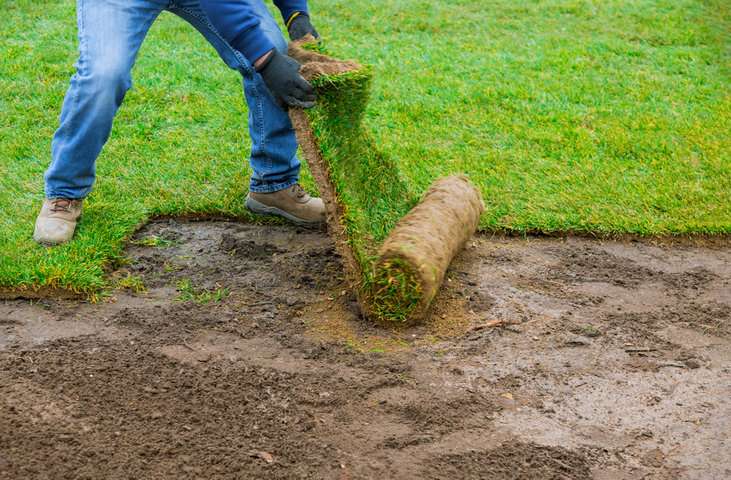
Once the ground is prepared, the sod must be laid immediately upon delivery.
Start with a Straight Edge: Begin laying the first row along a long, straight line, such as a driveway or sidewalk. This will ensure your rows are even and straight.
Stagger the Seams: Lay the second row next to the first, staggering the end seams in a brick-like pattern. This helps prevent visible lines and potential erosion.
Butt the Edges: Make sure each piece of sod is butted tightly against the next, but do not overlap them. Overlapping can create an uneven surface and hinder root growth.
Trim and Fill: Use a utility knife to cut sod pieces to fit around obstacles or fill in small gaps.
Step 3: Rolling and Watering
This final step is crucial for the sod to take root successfully.
Roll It: Once all the sod is laid, use a lawn roller to gently press the sod pieces down. This ensures firm contact between the sod and the soil below, removing air pockets that can dry out the roots.
Water, Water, Water: Immediately after rolling, begin the initial watering. The sod and soil below should be saturated. For the first two weeks, water daily, ensuring the sod is consistently moist. In Williamson County’s heat, this often means watering more frequently to prevent drying out. Over the next several weeks, you can gradually reduce the frequency of watering as the roots establish.
Sod Laying Mistakes
Even with the best intentions, beginners can make common mistakes that jeopardize their new lawn.
Mistake #1: Skipping Soil Prep. This is the number one cause of sod failure. Without loose, nutrient-rich soil, the roots will struggle to grow, and the sod will die.
Mistake #2: Not Watering Immediately. Sod is a living, perishable product. It begins to die the moment it is harvested. It must be laid and watered within a few hours of delivery, especially in the heat of a Texas summer.
Mistake #3: Overlapping Sod Pieces. Overlapped sod pieces create bumps and prevent the roots from taking hold properly, leading to dry, dead spots.
Mistake #4: Incorrect Watering. Both overwatering and underwatering are fatal. Overwatering can lead to fungal diseases like brown patch, while underwatering can cause the sod to dry out and turn brown. A careful balance is key.
Mistake #5: Mowing Too Soon. Do not mow new sod until it has had at least two weeks to root. You can test this by gently tugging on a corner; if it resists, it’s ready for its first mow.
Best Sod Types for Williamson County
Selecting the best type of sod is just as important as the installation process itself. In Williamson County, where the climate is warm and the soil is alkaline, two popular choices are Bermuda grass and St. Augustine grass. Bermuda grass is highly regarded for its resistance to heat and drought, making it ideal for sunny areas. On the other hand, St. Augustine grass offers moderate shade tolerance, making it suitable for yards with mature trees. If you’re looking for a very low-maintenance and drought-tolerant option, Zoysia grass is becoming increasingly popular.
Sod installation is a fantastic way to achieve a stunning lawn in Williamson County. By focusing on meticulous soil preparation, proper laying techniques, and a disciplined watering schedule, you can avoid the common mistakes and ensure your new lawn thrives for years to come.
B&B Landscaping & Masonry in Williamson County, Texas, lives up to its moniker of being “A Step Above the Rest” by offering comprehensive landscaping and masonry services. With 16 years of experience, they provide a wide range of services, including landscape design and installation, hardscaping, patios, outdoor kitchens, fire pits, and various masonry projects like retaining walls and fencing. Whether you need a complete landscape transformation or specific masonry work, B&B Landscaping & Masonry is dedicated to delivering quality craftsmanship and customer satisfaction throughout Williamson County.